Blog
Remote Work in Forest City Malaysia: A Smart Choice
Remote Work, Lifestyle, Forest City, Digital Nomads, Smart City
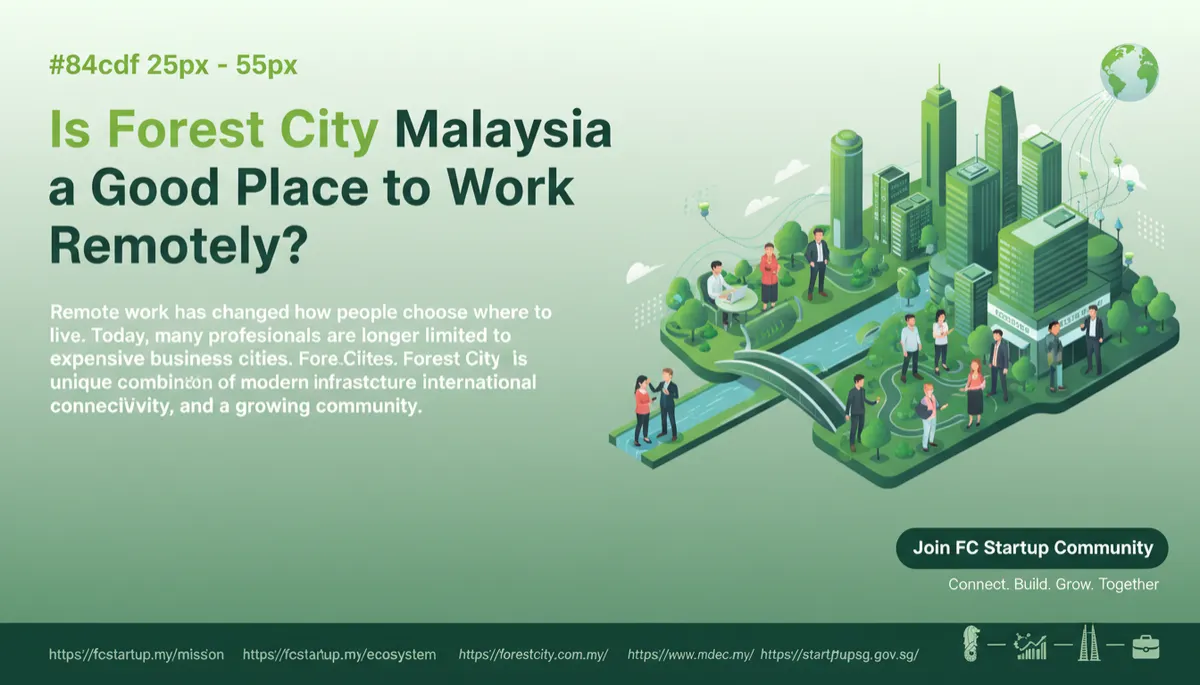
Is Forest City Malaysia a Good Place to Work Remotely?
Remote work has changed how professionals choose where to live, invest, and build their careers. Forest City in Johor, Malaysia, positioned next to Singapore and newly designated as a Special Financial Zone, is quietly emerging as a base for remote workers, digital nomads, and founders who want Southeast Asia access without big-city stress or costs.
At its core, the question is simple: is Forest City actually a good place to work remotely, or is it just another ambitious real estate story? To answer that, it helps to look beyond marketing and examine lifestyle, costs, connectivity, community, and the realities of working from a new smart city still finding its identity.
Why Remote Workers Are Looking at Forest City Malaysia
Forest City sits in Johor, just across the border from Singapore, giving remote workers a strategic location with very different cost structures on each side of the causeway. You can live in Malaysia, pay Malaysian prices, and still be a short trip from one of Asia’s strongest business and innovation hubs. For founders and professionals who work with regional or global teams, this geography is powerful: easy access to Singaporean business networks, Southeast Asian markets, and international airports, all while enjoying a quieter home base.
Forest City itself was designed as a smart, integrated development with a long-term vision: modern infrastructure, waterfront living, and a built environment that supports both residential comfort and commercial activity. As Malaysia’s first tax-free Special Financial Zone, it is also part of a broader strategy to attract international talent, companies, and capital to Johor and the Forest City ecosystem.
Affordable Lifestyle Compared to Major Cities
One of the main reasons remote workers look beyond traditional business hubs is cost. Forest City sits firmly in the “affordable but modern” category when you compare it with cities like Singapore, Hong Kong, or major Western capitals. As of mid‑2026, resale apartments in Forest City can often be found in the RM 300,000–500,000 range, significantly below their original launch prices, while median rents hover around RM 1,400–2,500 per month for typical two-bedroom units, depending on furnishing and location.
For a single professional, monthly living expenses excluding rent are generally in the RM 2,000–3,500 band, depending on lifestyle. Even when you add rent, total monthly costs often remain well below what you would pay for a similar standard of living in Singapore or other global hubs. For remote workers paid in stronger currencies, that cost differential can translate into meaningful savings, longer runway for startups, or the ability to reinvest more into business and personal growth.
Modern Living Environment with Smart-City Ambitions
Forest City was built as a master-planned, modern city. That means high-rise apartments with contemporary layouts, landscaped public spaces, and an urban design that leans heavily into greenery and waterfront views. For many remote workers, especially those used to dense, older city centers, the combination of newer buildings, elevators that work, and on-site facilities like gyms, pools, and convenience stores can feel like a genuine upgrade.
Internet connectivity is a core requirement for remote work, and Forest City benefits from Malaysia’s relatively strong broadband infrastructure. While individual building setups vary, high-speed internet is widely available, and mobile data is affordable by global standards. The environment feels more like a resort-style smart city than a chaotic metropolis, which appeals to professionals who want to live and work in the same integrated space without sacrificing comfort.
A Better Environment for Focus and Productivity
Not every remote worker wants the energy of a big city. For some, productivity comes from having fewer distractions, less noise, and more control over their routines. Forest City offers exactly that: less congestion, more waterfront walks, and the kind of quiet that makes deep work sessions easier. You can step out from your apartment onto promenades, parks, and seaside views instead of crowded streets and traffic.
For freelancers, startup founders, and online business owners, this environment can be a strategic advantage. It becomes easier to design a workday that includes focused mornings, midday workouts, and evening reflection, without the constant pressure of a high-intensity city. When your cost base is lower and your surroundings are calmer, you often gain more bandwidth—both mental and financial—to think long term.
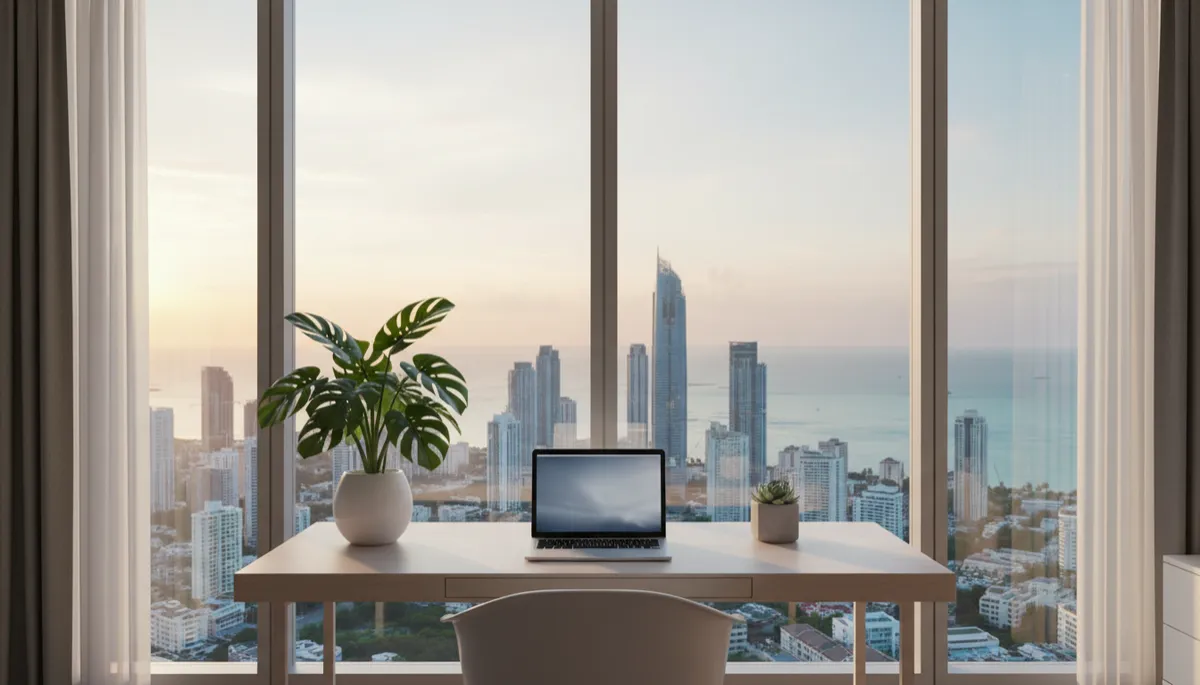
Calm, well-lit apartments make it easier to build sustainable deep-work routines.
A Growing International Community – and Its Gaps
A successful remote work destination is never just about buildings, bandwidth, and beaches. It is about people. Forest City has begun to attract a mix of international residents, entrepreneurs, investors, and technology professionals, partly thanks to its Special Financial Zone status and its proximity to Singapore, Johor Bahru, and regional initiatives like MDEC in Malaysia and Startup SG across the border.
At the same time, Forest City is still developing. Some buildings have lower occupancy, and the city does not yet have the density of meetups, events, and casual collisions you would find in Kuala Lumpur, Singapore, or Penang. For remote professionals, this means the upside is clear—more space, more quiet, more room to build—but you need to be intentional about how you plug into community and opportunity.
The Importance of Community for Remote Workers
Remote work offers freedom, but it can also be lonely. Many digital nomads and founders discover that, after a few months, what they miss most is not an office—it is community. People to bounce ideas off, partners to build with, and friends to share the journey. That is where curated communities become important: they bridge the gap between a beautiful place to live and a meaningful place to grow.
FC Startup was created with exactly this in mind. The mission is simple but ambitious: connect entrepreneurs, innovators, and remote professionals in and around Forest City, and give them a trusted space to share ideas, explore opportunities, and support one another. Through the ecosystem, members can network with builders, access discussions and events, and find collaborators who understand both the promise and the challenges of building from a new smart city.
💡 Community Insight: In emerging hubs like Forest City, the right community often matters more than the right coworking space. People create momentum long before infrastructure catches up.
Is Forest City Good for Digital Nomads?
For digital nomads, Forest City can be a strong option if you value an affordable, modern base with easy access to Singapore and wider Southeast Asia. The lifestyle is relaxed, the housing stock is new, and the environment is conducive to focused work. You are close enough to major ecosystems to attend events or meetings, but far enough away to avoid big-city prices and burnout.
There are, however, practical considerations. Transportation relies heavily on rideshare and private vehicles. Visa requirements will depend on your nationality and whether you are exploring options like Malaysia My Second Home or Forest City’s Special Financial Zone pathways. And while there have been coworking and coliving experiments in the area, current options are mostly located in nearby Medini and Johor Bahru rather than within Forest City itself. If you prefer a highly social, walkable nomad hub with dozens of cafés and coworking spaces, Forest City will feel quieter and more intentional.
Who Should Consider Working Remotely from Forest City?
Forest City tends to suit professionals who are clear about their priorities. If you are a remote employee who wants a stable, comfortable base in Southeast Asia, the combination of modern apartments, lower costs, and regional connectivity can be compelling. You can maintain your global role while enjoying a lifestyle that feels more resort-like than corporate.
Freelancers who need long stretches of uninterrupted focus will appreciate the quiet, while startup founders and digital entrepreneurs can use Forest City as a strategic base: close to Singapore for fundraising and partnerships, but with a cost structure that supports experimentation and longer runways. Investors looking at the city from a real estate or business perspective may also be drawn to its Special Financial Zone incentives and its role in Johor’s broader development, supported by agencies like Invest Johor.
Forest City vs Big Cities for Remote Work
Factor Forest City Major Cities Cost of living Generally more affordable, especially housing and daily expenses. Usually higher, particularly in global hubs like Singapore. Environment Relaxed, waterfront, and modern, with a resort-like feel. Faster-paced, denser, and more intense day to day. Space More living space, newer units, and generous common areas. Often limited, with smaller apartments at higher prices. International access Near Singapore, with strong regional connectivity. Varies widely by city and region. Community Growing international community; curated networks are key. More established ecosystems and event calendars.
The “better” choice depends on what you prioritise. If you want constant energy, dense networking, and a long list of physical events, a major city still wins. If you value space, affordability, a quieter lifestyle, and the ability to dip into big-city networks when needed, Forest City becomes a serious contender.
Building the Future of Remote Work in Forest City
Remote work is reshaping how cities compete. Places that combine affordability, connectivity, and community are well positioned to attract global talent. Forest City has many of the right ingredients: a strategic location near Singapore, a modern built environment, Special Financial Zone incentives, and a growing base of international residents and founders. The next chapter will be written by the communities and companies that choose to build there.
FC Startup is part of that story. By focusing on connection, collaboration, and a trusted ecosystem for entrepreneurs and remote professionals, it helps turn Forest City from a collection of buildings into a place where ideas compound. As more founders, remote teams, and investors explore Johor and Forest City, the opportunity is clear: to create a new kind of waterfront base for work and life in Southeast Asia.
Join FC Startup Community: Connect, Build, Grow
If you are a founder, remote worker, entrepreneur, or innovator exploring Forest City—or already living nearby—the next step is simple: plug into a community that is actively shaping the future of this smart city. FC Startup Community is designed for people who want more than just a place to stay. It is for those who want to connect, build, and grow together.
Connect. Build. Grow. Together — from Forest City to the wider Southeast Asian ecosystem.